
Always curious to know more about how healing happens, I was happy to get my hands on the book Cured: The Life-Changing Science of Spontaneous Healing, by Dr. Jeffrey Rediger, who is on the faculty at Harvard Medical School. While a medical student, Rediger was trained not to pay attention to cases of spontaneous remission of life-threatening illnesses, to consider them unexplainable “flukes.” It wasn’t until years later that he began to wonder what could be learned from such cases. In this book, after seventeen years of studying numerous cases of “spontaneous remission,” he reports that there is a great deal that can be learned about how and why the body heals.
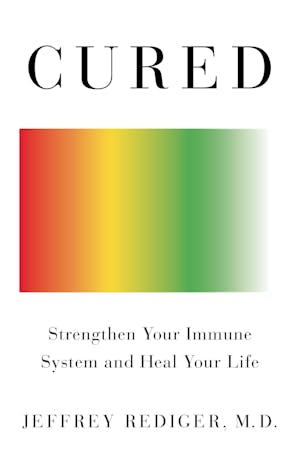
Rediger’s book caught my attention right from the beginning. In the introduction, he tells the story of Claire, a woman diagnosed with an aggressive pancreatic cancer. When caught at a late stage, pancreatic cancer is usually fatal within a year and has an abysmal five-year survival rate. Claire, however, became completely cancer-free within a year of her diagnosis and remained so for about ten years. I was eager to learn about her approach to healing.
After her diagnosis, Claire did a great deal of research. Then she declined the offered medical treatments, which in her late stage case promised lots of pain and only very slim chances of real recovery. Instead, she decided to make some major changes in her way of life, including her diet, lifestyle, emotions, and spirituality. In order to live more fully and authentically, Claire confronted fears and other barriers to living the way she really wanted. She moved to a part of the country where she had always wanted to live. Then she “just let nature take its course.” She explained: “I decided to live with as much zest and happiness as I could for however long I had left.”
For several months after walking out of her doctor’s office, Claire felt worse and worse. Then, slowly, she began to feel better. After a while she felt healthy again. Five years after her diagnosis of pancreatic cancer, during an CT scan for an unrelated abdominal issue, Claire’s doctors were astonished to see that the tumor that had once been in her pancreas was no longer there. She had become a different person than before, with a new understanding of what her life was about and why she was in the world.
Like Claire, the people profiled in Cured for their spectacular cures all wanted to live, and they were willing to make big changes in their lives in order to do so. But another important thing they had in common was that they also made peace with death. They accepted that their lives would end someday. Rather than focus on fighting death, they put their energy and attention into living the best way possible.
When Dr. Rediger began to look into the documented cases of spontaneous remission of “incurable” diseases, he learned that in the last century, “reports of spontaneous remission have slowly increased in both number and frequency, typically with a spike after significant conferences, books, or major media stories.” In the 1990s, the Institute of Noetic Sciences “documented 3,500 references to spontaneous healing across eight hundred journals.” Because the medical profession has generally been uninterested in exploring or documenting such cases, the documented ones are a small percentage of the actual number of such healings. At a large conference, Rediger polled his medical colleagues, asking how many had witnessed a recovery that had no medical explanation. All over the room, doctors raised their hands. When he asked how many had published an article documenting such cases, all hands went down.
Unlike Claire, most of these people profiled in Cured did not walk away from their doctors. As Rediger explains, “many instances of spontaneous remission … occur in concert with the extraordinary efforts of dedicated physicians working at the tops of their fields. Remarkable recoveries simply tell us that these interventions are not always enough and that they do not hold all the answers to healing.” As a doctor, Rediger was trained primarily to focus on ameliorating symptoms of illness. Studying spontaneous remissions taught him that the medical profession still has a great deal to learn about the root causes of illness and how to address them.
Diet, lifestyle, and stress were often the first areas of their lives in which the people who healed made major changes. All of them are areas with important impacts on the immune system, the body’s system of natural defense against illness. In addition to these things, Rediger also discovered that radical healing is deeply connected to, “our thoughts, beliefs, and even our most fundamental, unexamined sense of self.” Recovery of one’s deepest identity, he found, was the basis of much healing. And love, he wrote, “touches and heals something that medications can’t touch.”

One of the early chapters in Cured is entitled “Eat to Heal.” Radical changes in diet were made by the majority of the people he studied, but they did not all make the same changes. In recommending to readers the most health-promoting diet, Rediger pointed to recommendations recently made by thirty-seven leading experts for what they called a “planetary health diet.” Their recommendations were similar to the diets adapted by the people Rediger studied: “far more fruits and vegetables, whole grains, legumes and nuts, and far less meat, dairy, refined flours, and sugars.” These experts recommended that people in developed countries reduce meat consumption by 80%. Rediger advises readers to eat foods with higher nutritional value (“nutritional density”) and avoid unhealthy levels of sugar and salt, found in most processed foods. Sugar is addictive and causes inflammation. Based on what he was seeing in his studies, Rediger decided to stop eating processed foods and refined sugar; he lost forty pounds without making any other changes.
Dietary changes are important and often key to maintaining health or to healing illness, but they are not the only changes that contribute to spontaneous remission. In the second half of Cured, Rediger shares what he learned about reducing stress, in particular about staying in the relaxed and healing parasympathetic mode of our nervous system. Today a lot is being written about the vagus nerve and its role in turning on the parasympathetic mode, which is key to healing. We can engage the relaxation response and shift into the parasympathetic through meditation, prayer, yoga, and other relaxing modalities, but what keeps us in this healing mode, Rediger discovered, is love and connection. He writes, “We know now that the vagus nerve is activated by compassion for others, compassion for the self, and positive feelings in general. We know that what really lights up that circuit is not only relaxation response but also love—micro-moments of positive connection with those you are intimate with and even those you barely know.” I imagine that the deep, spiritual connection to God, others, and life itself that can happen in the Quaker meeting for worship is deeply healing in this way, too.

To illustrate the point that positive and loving connections with others can be even more important than eating healthy food, Rediger cites the famous case of the tight-knit community in Rosetan, Pennsylvania in the 1960s that had uncommonly low rates of heart disease in spite of a dietary culture high in fat and cholesterol. What preserved the heart health of the Rosetan community? They were “gathering together around meals, maintaining extraordinarily close family ties. They found joy and community around the sharing and experience of food.” Community ties, a healthy sense of identity, and joy have great healing effects.
Part Two of Cured is called “The Miraculous Mind” and begins with a visit to a doctor in Ohio, a devoutly Catholic medical doctor with a background in anesthesiology and surgery who is known not so much for the form of electo-acupuncture he practices but for the divine healing love that flows through him to his patients, some of whom have been healed of “incurable” illnesses. The doctor describes himself as an “energy healer” and believes that prayer is a form of energy. It’s the energy of God that flows through him, he says. We live in a quantum field and everybody has access to that same divine energy. He believes that he is called to bridge science and spirituality.
Rediger describes several of this Ohio doctor’s patients who have had extraordinary healings, including a girl born with cerebral palsy who had been wheeled into his office in a wheelchair and ran out after her first treatment. There is also a chapter about Dr. Patricia Kaine, a medical doctor and single mother who had been diagnosed with idiopathic pulmonary fibrosis, a progressive and ultimately fatal disease with no known cure. After several years of treatments using standard medicine and a steady decline in her lung function, Dr Kaine started treatments with the Ohio doctor known for healing prayer. Slowly she began to improve and gradually her lung condition reversed. Scar tissue in her lungs disappeared, something not known to happen through medical treatments.
When Rediger met the Ohio doctor, he asked to see the files of people who’d “had an incurable medical illness, as well as indisputable evidence of both accurate diagnosis and recovery.” He was given twenty-five such cases and offered more if he wanted them. His study of these patients led Rediger to a deeper study of the placebo effect and then to a study of quantum physics and the implications it has for healing in the human body.
Rediger had long been intrigued by a spontaneous healing that had happened in a Boston hospital where he was working. A patient diagnosed with multiple myeloma, considered to be “an incurable and eventually fatal” disease, came in because of severe pain in his back. A CT scan showed that a tumor in his spine was lodged between his vertebra. Surgery was scheduled to relieve the pressure on the spine. The day before the scheduled surgery, just a few days after the CT scan, the patient was put into an MRI machine, a standard pre-op procedure so that the surgeons could have better images of the tumor they hoped to remove. While inside the MRI, the patient had a visionary mystical experience– or a strange dream–that left him feeling “oddly calm.” Afterwards, the images taken by the MRI showed that the tumor was “nearly completely resolved.” Surgery was canceled, and the medical professionals at the hospital were left to ponder the mystery of what happened. When Rediger checked with the patient years later, he was still doing well. One of the quantum physicists whom Rediger consulted during his study of spontaneous healings told him that “quantum mechanics, as he understood it, absolutely supported the idea that the mind had a role to play with physical health—and even more broadly with the world around us.”
When it comes to health and healing, many things can play a role: diet, exercise, eliminating stress, quieting the mind of mental chatter, letting go of constricting beliefs, getting out of unhealthy situations and unsupportive relationships, and opening to more connection and to love itself. Rediger’s search led him to the conviction that there is something even more fundamental than all of these changes. Most of the patients who had spontaneous remissions had also healed their identities on fundamental levels. They paid attention to their inner life and shed roles, labels, and masks that were false. Rediger explains that, “we have a whole other identity that is deeper, more complete, more foundational. We aren’t what we do. We aren’t our past actions. We aren’t necessarily the people our loved ones believe us to be. And we certainly aren’t our illnesses. The true self exists, invisibly and mysteriously, beyond all these labels and masks.” Those who had miraculous healing were often those who had the courage to seek their purpose in life and their deepest, true identity.

In his final chapter, Rediger asks readers to discard anything in the book that makes them feel blamed or responsible for their illness, anything that doesn’t resonate or inspire. He wants people to feel empowered. He concludes by writing, “To move forward without feeling judged, blamed, or responsible, it’s important to remember that ultimately, it’s not about the illness. It’s not about right or wrong or about specific things that you do or don’t do that will heal you or not. It’s about getting a life that’s meaningful, where you understand and experience your own worth, and where you know what your purpose is and what you want from this life—however short or long it may be.”
Cured: How have you experienced of your own abilities to heal?
© 2023 Marcelle Martin
A Guide to Faithfulness Groups explains what faithfulness is and how it can be cultivated by small groups that practice ways to listen inwardly together for divine guidance, a practice that holds great potential for supporting individuals of any faith in allowing the work of the Spirit to become manifest through them and their communities.
Our Life is Love: The Quaker Spiritual Journey describes the transformational spiritual journey of the first Quakers, who were inwardly guided by God to work and witness for radical changes in their society. Focusing on ten elements of the spiritual journey, this book is a guide to a Spirit-filled life, designed to be a resource for both individuals and groups to explore their spiritual experiences. It describes the journey of faithfulness that leads people to actively engage in God’s work of making this world a better place for all. Our Life is Love has been reviewed by Marty Grundy in Friends Journal, by Carole Spencer in Quaker Religious Thought, and by Stuart Masters on A Quaker Stew. The first few chapters of this book are available for download as a pdf HERE.
Both books are available from Barclay Press in hardback and paperback.

 A Whole Heart
Thank you for sharing, Marcelle. It was fascinating, inspiring and hope-giving. His conclusion struck me as both powerful and true.
Sending love and hugs to you and Terry!
Thank you, Jane! Love to you and Wade!
Thanks for this summary, Marcelle. The advice resonates. I especially appreciate that “Rediger asks readers to discard anything in the book that makes them feel blamed or responsible for their illness.” Some authors who write about mind, body, spirit connections do not seem to have that sensitivity.
Thank you, Eileen, for pointing out this important statement. Judgment about illness, our own or other people’s, is probably an impediment to healing.
I know of two healings in the vein of Dr. Rediger’s reports. When I was a student at ESR in Richmond, Indiana, a part time student who lived locally told me he had recently been scheduled for heart surgery. The night before the scheduled surgery his pastor came to the hospital and prayed over him, asking for healing, naming the specific areas to be healed. The next morning when the medical professionals did last minute scans prior to taking him into the operating room they found his heart problem was gone. My friend was astounded, and so was his pastor-the very cure the pastor had specifically asked for had happened!
The second is a local person’s account of being cured of an “incurable” illness. Bob Cafaro is a cello player in the Philadelphia Orchestra. His book, When the Music Stopped, tells of his diagnosis of multiple sclerosis and his extraordinary efforts to beat it. Bob focused the whole of his time and energy making radical changes in his diet, exercise regime, and frame of mind and overcame the disease that threatened to end his career and shorten his life. He is playing with the orchestra today.
Beth, Thank you so much for telling us these wonderful, inspiring stories! Marcelle
I’ve just read this post. Thank you, Marcelle, for sharing it with us all. I’m going to share it but only with your permission. Love to you, Gerry
Gerry, I would be pleased if you shared this post! Marcelle