Shifting to the Heart

“Meeting for worship is a Quaker technology for shifting levels of consciousness,” Bill Taber sometimes explained.  A highly respected teacher of Quakerism, he would have a twinkle in his eye when he said this.  As a Conservative Friend, he often used explicitly Christian terms to describe the profound transformation that can happen in a gathered meeting for worship.  But when addressing liberal Friends, he found metaphors that spoke to the condition of his listeners.  

I first began attending morning meetings for worship at Pendle Hill retreat center while Bill was still the Quaker Studies teacher there.  As the group settled together into the silence and turned inward, the shift seemed subtle. On a few occasions when I arrived a bit late, however, I experienced the shift in consciousness as soon as I walked into the worship room.  When Friends were already gathered into the presence of the Holy Spirit, held in a palpable silence, I felt as though I were stepping into a holy light that permeated everything.  In his pamphlet “Four Doors to Meeting for Worship,” Taber writes:

I once thought worship was something I do, but for many years now it has seemed as if worship is actually a state of consciousness which I enter, so that I am immersed into a living, invisible stream of reality which has always been present throughout all history.

It was rare to experience the group being gathered that way at the Quaker meeting I attended on Sunday mornings.  Friends told me about the awesome spiritual power experienced by the first Quakers in the seventeenth century.  Many were satisfied just to recount the facts of a celebrated history.  Some Friends, however, conveyed a deep longing to know that same spiritual power in our time.  Some had dipped many times into the Eternal Stream themselves and were yearning for a faith community more on fire with divine Love and Truth.  I began to study the writing of early Friends, hoping to discover how and why the first Quakers had been blessed with such a powerful outpouring of the Holy Spirit upon them. 

I found many descriptions of awe-filled gathered meetings for worship experienced in the first years, including accounts by Francis Howgill and Edward Burrough, a pair who had traveled from the rural north of England to bring the Quaker message to the sophisticated city of London.  Spiritual seekers and skeptics alike flocked to hear these two men speak about the Light of Christ within.  Many returned and learned how to be gathered in worship in a way that radically changed them, empowering them to live their lives with God at the center.  While reading Howgill’s description of those gathered meetings, I’ve sought for clues about how they opened themselves to the transforming experience of entering into the Kingdom of Heaven day after day.  Howgill wrote:

The Lord of Heaven and earth we found to be near at hand, and, as we waited upon him in pure silence, our minds out of all things, his heavenly presence appeared in our assemblies, when there was no language, tongue, nor speech from any creature. The Kingdom of Heaven did gather us and catch us all, as in a net, and his heavenly power at one time drew many hundreds to land. We came to know a place to stand in and what to wait in; and the Lord appeared daily to us, to our astonishment, amazement and great admiration, insomuch that we often said one unto another with great joy of heart: “What, is the Kingdom of God come to be with men?

They learned “a place to stand in and what to wait in.”  They stood in their ardent faith, and waited in the expectation that the living presence of God and the Light of Christ within would become manifest among them.

It is key that they waited in “pure silence,” sometimes for hours.  This was an outward silence, with “no language, tongue nor speech” from anyone.  Equally or more important, it was also an inward silence: their minds were “out of all things.”  In his “Epistle To All People Upon The Earth,” George Fox advised everyone to be “still from your own thoughts and imaginations, and desires and counsels of your own hearts, and motions, and will.” In this inward stillness they waited to experience the indwelling presence of God. 

Patient, expectant waiting can open to a direct awareness of that divine Presence.  When that happens to a person, Fox says, “that of God manifested in him, leads his mind up to God, [and] he comes to the quiet and peaceable life and comes to retain God in his knowledge….”  In the silence, the inward Light reveals or “shows” the individual and the group their true condition.  They are led to a higher kind of knowing, another level of consciousness.  According to Fox, those who patiently practice this silent waiting, “such shall find mercy of God, when their minds are guided up unto God, and … in one half hour have more peace and satisfaction, than they have had from all other teachers of the world all their life time.” 

Such experiences, whether they occur in solitude or in a gathered meeting for worship, can have a lasting and transforming effect.  According to Fox, they show people how to “find and feel the way of peace,” and lead them “to grow up in that life the scriptures were given forth from, and the life the saints lived in.” 

In beautiful advice for finding and entering into the inward divine Presence, Isaac Penington instructs people to, “Give over thine own willing; give over thine own running; give over thine own desiring to know or to be any thing.”  When the mind and will become silent, no longer grasping for anything, then one can, “sink down to the seed which God sows in the heart, and let that grow in thee, and be in thee, and breathe in thee, and act in thee….” 

Penington, Fox, and many other early Friends speak of the presence of God experienced in the heart.  In his descriptions of the powerful gathered meetings at the beginning of Quakerism, Francis Howgill tells of a spiritual fire being kindled in the heart, and of the hearts of those present becoming united with others and with God:

[H]oly resolutions were kindled in our hearts as a fire which the Life kindled in us to serve the Lord while we had a being…. And from that day forward, our hearts were knit unto the Lord and one unto another in true and fervent love, in the covenant of Life with God…

Shifting to the Heart: Have you experienced your mind becoming still and your awareness shifting to another level of consciousness?  Has a stillness of mind helped open your heart to divine love and passion? 

*     *     *     *     *

Barn at dusk tall crop

You can order Marcelle Martin’s new book, Our Life is Love: the Quaker Spiritual Journey, from Inner Light Books. It’s available in hardback, paperback, and ebook.  The book was designed to be a resource for both individuals and groups to explore their own experiences of the ten elements of the Quaker spiritual journey. QuakerBooks provides discounts for books ordered in quantity.

On the weekend of April 8-10, 2016, Pendle Hill is hosting a workshop on Our Life is Love to explore how the ten elements of the Quaker spiritual journey manifest in our own experience.  Together participants will practice opening more fully to the presence and teaching of God within, and encourage each other to live the truth of Love more passionately.

© 2016 Marcelle Martin

Posted in Contemplative spirituality, Learning from Early Friends, Mysticism, Quaker Faith Today, Radical Christianity | Tagged , , , , , , , , , , , , , , , , , , , , | 6 Comments

The Fruit of Long Labor

At the age of five I wrote my first story, on the back of used computer paper my father brought home. By the time I was six, I felt certain I had been born to write books. In the fifty years since then, I’ve been frustrated and impatient with myself for not having published a book yet. The novel I finished just after I finished graduate school was returned by many agents and publishers with the words, “If you write something more mainstream, send it to us.”

By age twenty-seven, I knew I wasn’t born to write books that conformed to society’s norms and notions; I was ambitious to write something that would make the world a better place. I’d had a powerful spiritual awakening that made me understand life in a whole new way. I passionately wanted to share the truth I’d discovered about the divine reality within us all, present here and now. In love with this amazing truth, I no longer wanted to write fiction. Instead, I wrote hundreds of pages about my own experience. I didn’t feel my story was ready for publication, however.  I did not understand exactly what was happening to me or why, and I also sensed that the real story wasn’t just about me.  I knew others were awakening to a powerful, sacred dimension of life, and I wondered what we were collectively being called to.  I sensed that the growing crises of our time, especially environmental destruction, would require something new of humanity.

I had been reading the Bible and searching the libraries for accounts of other people’s spiritual experiences throughout history, direct experiences of God and Christ and the Light within. Stories have always been more compelling to me than ideas and doctrines. I needed to know about people’s actual experience and the lives they lived as a result. I discovered that, in the past, most women with the kinds of experiences I’d been given had been sent to convents or monasteries, at least those about whom books were available. However, it was clear to me that the God I had encountered was sending me into the world, not out of it. In face, I was led to move from the beautiful rolling hills of Western Massachusetts to the inner city of Philadelphia.

I visited different churches and spiritual groups, needing a community that could support people seeking to be faithful to a call from God. The first time I attended a local Quaker Meeting, I found a biography of George Fox in the library. I read about his spiritual experience, his radical message about the Light of Christ within, and about the passionate Quaker community that formed in his time and witnessed for a different way of life. I became a regular attender at Lansdowne Meeting. Friends there welcomed me, and I was nurtured by many of the meeting’s elders. I took classes and workshops at nearby Pendle Hill retreat center, and I learned by experience how the corporate spiritual practices of Quakerism can support a life dedicated to faithfulness.

Some of the elders I respected lamented that Quakerism today did not have the same vibrant power known by the first Quakers. Starting with the Journal of George Fox, I began reading seventeenth-century Quakers’ accounts of their Spirit-filled movement, wondering what it was about their spiritual journey that was so transforming and empowering. For seven years I lived alone for two months every summer in an old stone farmhouse beside Amish neighbors, months dedicated to research and writing. The house had been lived in by generations of history teachers, and the walls on every floor were covered with history books. I read about the turbulent times and fervent climate of religious seeking out of which Quakerism arose in England. In meeting libraries, college collections, and anthologies of early Quaker writing, I sought out their stories, seeking especially to learn about important Friends who are not well known in our time.

I was deeply moved by the willingness of some early Friends to travel for long periods away from home. Many suffered and some died to bring their liberating message to those who were spiritually hungry. I was amazed to discover how quickly the first Quakers began traveling to the colonies. I learned how their courageous and prophetic witness laid a foundation for religious freedom in colony after colony. In high school I had been a passionate student of American history, but had never been told about the important contribution made by early Friends.

For years I worked on my own account of the beginnings of Quakerism, telling the story of a network of bold, inspired people supporting one another in courageous faithfulness. Before that book was finished, however, another, shorter book was born from it, a book about ten elements of the Quaker spiritual journey, as experienced by early Friends and by Quakers in our time. Early in 2013 I began sharing first drafts of some of my writing about these elements in this blog, A Whole Heart. After writing about early Friends, I researched how Friends in our time have been inspired and empowered by God, Christ, the inward Light, and communal Quaker faith and practice.  

I spent three years living in Richmond, Indiana researching and writing my book about the Quaker spiritual journey. As the Mullen Writing Fellow at Earlham School of Religion in 2013, I received helpful and encouraging support and feedback from professors and students. Shortly before I returned to the Philadelphia area, a Quaker publisher in San Francisco, Charles Martin of Inner Light Books, expressed interest in publishing my book. We have been working together, mostly via email, since last July.

In the past six months my dream of publishing a book that would nurture the spiritual life of others has felt so close to fruition–and at the same time still so far from reality. My husband, Terry, is my first editor, best proofreader, and the biggest source of support and encouragement. Nonetheless, he became tired of hearing me say, “The book is almost finished!”

“I’ll believe it when I’m holding it in my hands,” he said.

Months were spent getting permissions, checking citations at the Swarthmore Friends Historical Library, revising endnotes, working with a copyeditor, revising the endnotes again, proofreading, waiting. When Charles sent me a pdf of the front and back cover, I knew what the book would look like. But it was still felt like just a dream.

Tuesday afternoon this week I came home with my friend Angi. We were both surprised to see a stack of boxes on my doorstep. I couldn’t remember having ordered anything. The return label said, “Inner Light Books.”

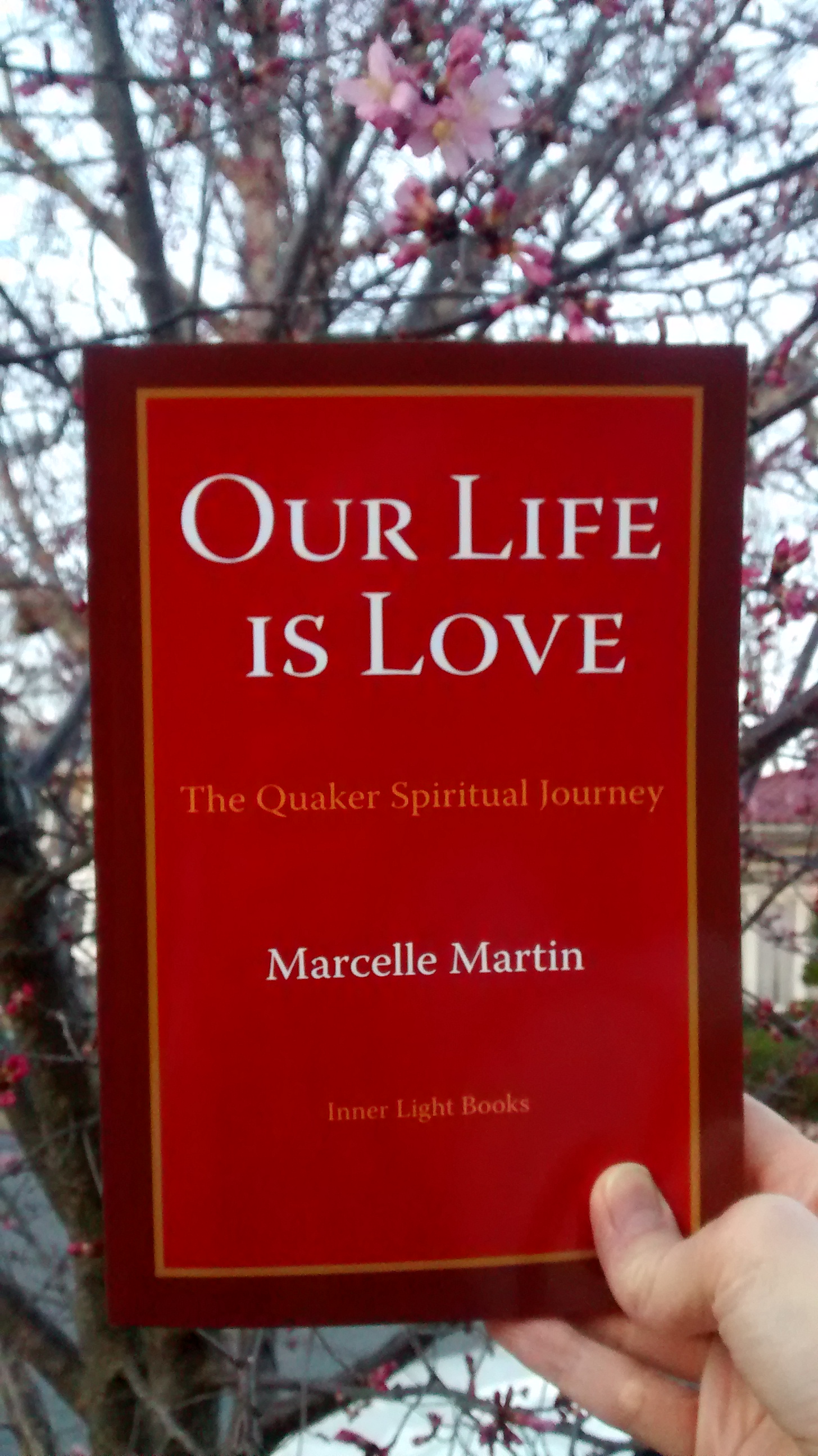
Inside the boxes, I found the fruit of long labor. Now I could finally hold the book whose cover I had seen months before, Our Life is Love: the Quaker Spiritual Journey. I’m glad Angi was with me and eager to read the book. Fruit becomes fruitful when people are nourished by it. It was wonderful to put a copy into her hands.  

The book arrived the day the cherry tree bloomed.

 *****************

A Guide to Faithfulness Groups explains what faithfulness is and how it can be cultivated by small groups that practice ways to listen inwardly together for divine guidance, a practice that holds great potential for supporting individuals of any faith in allowing the work of the Spirit to become manifest through them and their communities.

Our Life is Love: The Quaker Spiritual Journey describes the transformational spiritual journey of the first Quakers, who were inwardly guided by God to work and witness for radical changes in their society. Focusing on ten elements of the spiritual journey, this book is a guide to a Spirit-filled life, designed to be a resource for both individuals and groups to explore their spiritual experiences. It describes the journey of faithfulness that leads people to actively engage in God’s work of making this world a better place for all. Our Life is Love has been reviewed by Marty Grundy in Friends Journal, by Carole Spencer in Quaker Religious Thought, and by Stuart Masters on A Quaker Stew. The first few chapters of this book are available for download as a pdf HERE.

Both books are available from Barclay Press in hardback and paperback.

Find a Quaker Meeting near you: Quaker Finder

© 2016 Marcelle Martin

So happy the book is finally here!

So happy the book is finally here!

Posted in Contemplative spirituality, Learning from Early Friends, Quaker Faith Today, Radical Christianity | Tagged , , , , , , , , , | 11 Comments

A Spirituality of Wholeness: Heresy or Prophecy?

A review of Matthew Fox’s Confessions: the Making of a Post-Denominational Priest

The revised and updated version of Matthew Fox’s autobiography, Confessions, tells the story of a courageous and creative theologian, a Roman Catholic priest who articulated a life-affirming theology about the sacredness of all creation. He was silenced by the Vatican, however, and expelled from his order. Like early Quaker George Fox, Matthew Fox has asked deep questions about the nature of God and life, and he found answers he was able to put into fresh language. Both taught about the life of the Spirit in ways that were liberating and spiritually energizing for many people. Both men also found themselves in the midst of great controversy, accused of heresy.

When Confessions: the Making of a Post-Denominational Priest first came out in 1996, I hurried to buy a copy. I had been making my own long, expansive journey from the theology of my childhood church, and I was eager to read the story of the priest who wrote books with provocative titles such as Original Blessing and The Return of the Cosmic Christ. Matthew Fox was known for something called Creation Spirituality, a theology that affirms the sacredness and wholeness of all creation. Creation Spirituality is not the same thing as pantheism, which worships creation as God. Instead, it sees that God is in everything, and everything is in God. What God is is greater than creation, but infuses all created things. This is called panentheism. Matthew Fox sees traces of this theology in the Scriptures and in the teachings of some celebrated Christian mystics. He teaches that the world has been suffering from an outdated theology that has shaped the West in ways that are devastating to the planet’s people, creatures, and ecology. He insists that this destructive theology, perpetuated through institutional Christianity, does not spring from the teachings of Jesus.

Matthew Fox attended seminary during the reign of Pope John XXIII, and he felt the fresh winds of the Spirit that were ushered in at that time. The Second Vatican Council opened the Roman Catholic Church to the modern day and to ecumenical dialogue. In the late sixties, the Dominican order sent Fox to Europe to get a Ph.D. in theology. On the advice of Thomas Merton, the young priest chose to study in Paris. He went with a burning question: “What is the relationship between prayer and social justice?” His mentor at the Catholic Institute in Paris, the esteemed scholar Père (Father) M. D. Chenu, gave his theology students permission to be poets and artists as well as scholars.   He taught them to distinguish between a dualistic fall/redemption theology that denigrated the earth, women, and all things feminine, and a creation-centered spirituality that emphasized wholeness. It was a time of cultural turmoil, the era of the Civil Rights movement and protests against the Vietnam War.   Many of Fox’s fellow theology students were priests from Latin America interested in liberation theology. In Paris in the late sixties, he found himself in the midst of student riots and worker strikes. Père Chenu encouraged his students to bring their theology alive by engaging in the streets.

Ever afterwards, Matthew Fox sought to articulate a relevant Catholic theology for our time, one that sees the earth and all beings as worthy of reverence. At Mundelein College in Chicago and later at Holy Names College in California, he created and headed a graduate program called the Institute in Culture and Creation Spirituality (ICCS). His goal was to encourage a spirituality of wholeness, integrating body, mind, and spirit. Mysticism, prophecy, social justice, and culture were all part of the curriculum. Academic study was combined with poetry, art, and movement. Fox invited gifted teachers from other spiritual traditions, and also from science, to join the noteworthy faculty. This caused controversy among conservative Catholics.

After the death of Pope John XXIII in 1963, the Roman Catholic Church began lurching away from the innovations of the Second Vatican, contracting back into an old conservative stance. Cardinal Ratzinger was appointed head of the department of the Vatican once called the Roman Inquisition. His mission was to weed out liberal progressives in the church. According to Confessions, the Congregation on the Doctrine of the Faith, headed by Ratzinger (later Pope Benedict XVI), “silenced, denounced, expelled, and often drove into poverty or early death over 105 theologians for doing exactly what theologians need to do: think.” (424) Matthew Fox was one of them. Cardinal Ratzinger found fault with several things in Fox’s teaching and writing. First was that he sometimes referred to God as Mother. He also focused on the Original Blessing of life, rather than on the Catholic doctrine of Original Sin. In his interfaith work, Fox joined in practices with Native Americans and people of other religions.

Fox was defended by the Dominican board that examined him and cleared him of heresy. Nonetheless, in 1988 Fox was silenced by the Vatican, forbidden to speak in public, teach, or publish any new books for a year. In obedience, he took a sabbatical. During that time he traveled to South America, where he visited with another silenced Catholic priest and theologian, Brazilian Leonardo Boff, a Franciscan known for his work on behalf of the poor and oppressed. Later, however, when Fox refused to close ICCS, he was expelled by his order, the Dominicans. He had to find a new home for his school, so he started the Institute of Creation Spirituality (ICS), in Oakland, California. These events brought greater public attention to Creation Spirituality.

The 1996 edition of Confessions ended shortly after his expulsion, which felt to Fox like being hit by a train. Soon afterwards, he became ordained in the Episcopal Church, where his theological thinking, exploring, and teaching were welcome. The newly expanded edition of Confessions includes the story of the twenty years since then. These have been years of greater freedom. Fox has continued to be a popular speaker and a prolific writer. He has continued to champion radical kinds of education, and he has been led to experiment with fresh forms of liturgy that appeal to young people. His Cosmic Mass shows multi-media images from around the planet and the universe; it also involves a great deal of lively music and dancing.  Each Cosmic Mass includes both celebration and mourning; each has a different theme, highlighting the suffering of oppressed people and the earth as well as the courageous work of prophetic people. Without his former institutional backing, however, Fox has struggled financially to make his innovations in education and liturgy available.

The new sections of Confessions contain some harsh criticisms of the two previous Catholic popes and the socially and theologically conservative hierarchy appointed by them. Speaking of “thirty-four dark years in recent Catholic history,” he condemns the church not only for expelling more than one hundred of its theologians, but also for protecting pedophile priests, and for opposing feminism and movements to support workers, the poor, and native peoples. He cites the huge decline in numbers of Catholics attending church services on a regular basis during those decades, especially the young people. In his anguish over the backward movement in the church since the Second Vatican Council, he has asked himself why God would allow this. His conclusion is that the Holy Spirit wants to, “end the structure of the church as we know it and to push the restart button on Christianity so that it more readily expresses the person and teachings of Jesus.” (424) He is glad that Pope Francis is attempting to bring the focus of the Roman Catholic church back to those teachings. He applauds Francis for daring to “speak of climate change and eco-devastation as a terrible sin.” (437) However, Fox does not see the future of religion in institutional churches. He believes that on the whole, the young people of the world are looking elsewhere, and that, “The Holy Spirit seeks a deep spirituality of action rather than a propping up of religious institutions.” (438)

For Quakers who know the story of George Fox, there is much about Matthew Fox’s biography that is familiar. In some discoveries, George was ahead of Matthew by 350 years. George Fox is included in a list made by Matthew Fox of Christian mystics who have espoused some of the tenets of Creation Spirituality in the past. He gives George Fox 3.5 stars out of 4. Matthew Fox has worked to resurrect such teachings from past Christian history. At the same time, he has made a fresh, earnest attempt to receive continuing revelation.  He believes ecumenical and interfaith dialogue are imperative; the insights of all religions can work together to “inspire our species to undergo the transformations required of our souls and societies and institutions.” (426) His recent work also helps bring together the insights of mysticism with those of science. Along with other important theologians such as Thomas Berry, Fox has been working to help create a New Story for our time that helps human beings to understand and embrace our true place in the sacred order of God’s creation. It is necessary and life-affirming work needed to help humanity turn away from the ecological destruction which has resulted from the disrespectful and unsustainable way we have treated the earth. The God that Matthew Fox celebrates is a Creator who endows everyone with sacred creativity meant for wholeness and for the healing of each other and the planet.

41vqdWb4M1L._SX331_BO1,204,203,200_

The Revised and Updated Confessions is available at: http://www.amazon.com/Confessions-Revised-Updated-Making-Postdenominational/dp/1583949356/

*   *   *   *   *   *   *

I will be facilitating the year-end retreat at Ben Lomond Quaker Center, Dec 27 – Jan 1 (Sunday – Friday) in Ben Lomond, California. The topic is In the Life and Power of God. Elaine Emily is serving as elder for the weekend. For more information, click HERE.

I will also be facilitating a weekend retreat January 22-24, 2016 at Powell House Retreat Center in Old Chatham, NY, on the subject of Transformation and the New Birth.  For more information, click HERE.

 © 2015  Marcelle Martin

Posted in Radical Christianity | Tagged , , , , , , , , , , , , | 11 Comments

We Work Through Prayer

For more than two and a half decades, I’ve held the intention of following God’s purpose–or will–for my life. And all of that time, I’ve struggled with a strong desire to do things my own way. When confronted with the need to make a decision or confront a problem, my first instincts are usually to worry, plan, and act on my own. I’ll listen for guidance for a short while, but if it doesn’t come immediately, my spinning mind puts itself in charge of the task. So many of the spiritual lessons I’ve received have been about learning to trust and listen patiently for guidance, then allowing the Spirit to work in and through me and others. Possibly the most important thing I’ve learned by carefully studying the writing of early Friends is how they distinguished between doing things in “one’s own will”–even things that seemed very good or wise–and allowing the Spirit of Christ within to be the initiator of their actions.

I receive lessons about this in every area of my life. There’s a lot to learn, and a lot to unlearn.

For me, every opportunity to write or teach about the spiritual life, or to facilitate a meeting for healing or a weekend retreat, is always an occasion for more noticing about how fearful and willful I still am, how much I like to be in control and meet the expectations of others, and how difficult it is for me to deep-down trust God to guide and lead me into action.

This struggle has continued as I’ve approached facilitating another fall weekend at Friends Center in Barnesville, Ohio. In 2013 and 2014 I led weekends there based on the material I’ve collected about ten elements of the Quaker spiritual journey. During the November 2013 weekend, we ran through all ten elements both as experienced by early Friends and as we have been aware of them in our own lives. It was an interesting weekend, but pretty intense. The Friends Center Committee thought that it would be fruitful for Friends to take more time and explore just a few elements in one weekend, in more depth. They invited me to return the next fall.

So last year we explored the three elements of Openings, the Refiner’s Fire, and Community. It was a better pace. We had more time to receive the profound teachings that are transmitted when we sit with certain very potent passages by early Friends and tell each other what we receive. We also took time to share the wonderful, painful, healing, challenging, and joyful ways that the Light of Christ has been at work within us and our lives.

In January of this year, Katharine Jacobsen, on behalf for the Friends Center Committee, asked if I was feeling a leading to facilitate another weekend in fall 2015. They had more possible offerings this coming year than usual, she added. At the time she asked, I knew my life was going to be busy this year. Perhaps I didn’t need to travel to Friends Center in fall 2015. And besides, I told myself, maybe Friends wouldn’t be interested in coming back for more so soon. I communicated my thoughts on this.

Katharine is an elder among Conservative Friends in Ohio Yearly Meeting. She has been a friend, mentor, and elder for me. She responded with a brief statement, so mildly phrased that the gentle rebuke could easily have been missed:

“The Friends Center Committee, working as it does through prayer, would like to know more about how you are led in regard to a theme for FC in 2015-2016.”

Ah…. They work through prayer. They weren’t asking for my first thoughts or my worries about coming back so soon. She asked me how I was led.

I took time to pray about it. When I did, I sensed a focus on being faithful. A question came to me with a lot of energy. So much energy it was almost intimidating, because of what it might ask of me and what God might bring forth.

What does faithfulness require?

I felt something stirring in me, like a bright light in my heart and belly. I felt the presence of the Light of Christ, ready to teach me something more about what faithfulness requires. I felt that this Light connected me with the planning committee at Friends Center.

So I wrote back to Katharine about what I experienced when I prayed about it. After they prayed some more, the committee scheduled a weekend on the topic of Faithfulness for the middle of November 2015.

As the time gets closer, I find myself called to deeper and deeper listening, as the most important form of preparation.

When I speak or write about the importance of worship, prayer, and discernment, I am always reminded of my own difficulties with taking the time to truly listen and wait upon guidance, especially when I’m impatient or anxious to get something done. Friends who feel a strong call to social action sometimes see waiting and listening as avoidance of the risks inherent in action. I was very glad recently, therefore, to read a 2013 Pendle Hill pamphlet entitled Nonviolent Direct Action as Spiritual Path, by long-time Quaker activist Richard K. Taylor, in which he shows that his faith and continuing prayer were essential to him as he participated in sometimes dangerous acts of witness and protest during the Civil Rights Movement and the Viet Nam War.

One of Taylor’s many remarkable stories stays with me. He writes that a number of the large, peaceful demonstrations in Washington, D.C. against U.S. involvement in the Viet Nam War were marred by what happened after most of the protesters went home. Many times fringe groups stayed behind and expressed their anger about the war through acts of violence in the streets.

After one large demonstration, there were reports of people throwing rocks near the White House, breaking glass, and of policemen firing tear gas. A few hundred Quakers gathered at the Friends Meeting of Washington, where they sought inwardly for guidance about how to be a peaceful presence in the midst of chaotic violence. They felt led to walk peacefully toward the White House and to keep listening for the still, small voice of God. As they neared the commotion, they saw running figures illuminated by police searchlights and clouds of tear gas. They began to cough.

A policeman stopped them at a corner near the White House and ordered them to turn back. He said that if they stepped off the sidewalk, he would club them or use tear gas. The Quakers decided it was time to listen for more guidance, Taylor wrote:

We gulped, but replied as calmly as we could manage, “We’re Quakers. We’re trying to follow God’s Spirit. We’re going to sit here on the sidewalk in silent prayer and consult with God about what to do.” (18)

They had an impromptu meeting for worship on the sidewalk, a “deep, deep silent worship.” A few people heard the quiet inner voice of the divine presence and offered messages aloud. Some felt called to continue forward and others to turn back. One voice said that each should follow the call they felt, without judging the choices of the others.

Feeling called to go forward, Robert Taylor and his wife Phyllis stood with the group who remained on the corner. They told the policeman they knew he’d been having a difficult night, but they felt they had received God’s guidance to keep going. The policeman said he would club them or use tear gas if they stepped into the street. They felt shaky, but an inner peace enabled them to step off the curb. The policeman surprised them by waving them on. These Friends spent the rest of the night quietly circling the White House. Some of the violent protesters joined them. During this walking vigil, a young man pulled a gun out of his pocket and showed it to Taylor, saying, “I planned to use this tonight, but I’m glad I ran into you all and found an alternative.” (19)

We Do Things By Prayer: Have you, too, struggled with quieting your thoughts, reactions, fears, and worries long enough to listen for how God is really leading you? Have you discovered that you are being led in surprising ways?

Stillwater Meetinghouse

Stillwater Meetinghouse

© 2015 Marcelle Martin

Posted in Learning from Early Friends, Quaker Faith Today, Radical Christianity | Tagged , , , , , | 6 Comments

Praying for the Pope

In the Philadelphia area, where I live, there was great excitement for months before Pope Francis came to visit in late September. Not only faithful Catholics, but people of many faiths or no faith have been touched by a man who makes the compassion of Christ real. Before coming to Philadelphia, the pope spoke to Congress and the United Nations and was hosted by the Obamas in the White House.  He came to Philadelphia for the World Conference on Families, but he also had lunch in a prison, spoke to immigrants about their value to their new nation, and met with victims of sexual abuse by Catholic clergy. Several times he kissed and blessed disabled people and children he saw along his route in Philadelphia.  Hundreds of thousands of people converged in the center of the city to catch sight of him coming down the Benjamin Franklin Parkway in his popemobile and heard him say Mass on the steps of the Art Museum, known from the movie, “Rocky.”

Before the pope’s visit, I felt a desire to go into the city to catch a glimpse of him speaking at Independence Mall or saying Mass. The streets into the center of the city were closed off for the event, however, and those who wanted to attend needed to take a train into the city, pass through a security check, and then, walk long distances. My desire faded as I contemplated the effort and the difficulties I would face. On the eve of his visit, I found myself at the home of a family living in Lower Merion Township, just outside the city. They had been invited to a “Pope Party” the next day. Punch and pizza would be served on the porch, with pontification.  People were invited to bring pasta, or other food beginning with a “p.” When a family member mentioned that we were only blocks from the seminary where the pope would be staying overnight, I was moved to take a walk in that direction, not knowing if he had already arrived or not. As I approached the walled grounds of the campus, “No Parking” signs were posted along the streets. I knew I was not likely to see the pope, but my solitary walk gave me time to reflect and pray about his visit.

I was raised as a Catholic, and I still attend Mass when I visit my mother. I am deeply moved when I am among devout Catholics, and I admire the faith of some feisty, radical nuns and priests I have met.  However,  I have long felt clear that the Roman Catholic church is mistaken in many matters, including the exclusion of women from the priesthood. Like early Quakers, when I attend Mass, I see how church hierarchy often makes it more difficult for people to experience the divine presence and teaching within themselves. Nonetheless, I am moved by a religious leader who proclaims that “mercy is more important than morality,” who visits prisoners, the poor, and the homeless, who acknowledges that God’s forgiveness extends even to atheists, and who has made plans for the Roman Catholic Church to offer forgiveness more widely. Throughout his religious career, Pope Francis has made it a point to spend time with those who are marginalized by society, offering fellowship and extending blessing to society’s outcasts, just as Jesus did. I am glad, also, that his recent Encyclical on the environment, Laudato Sí, has held up the urgent importance of addressing climate change and asked developed nations to take responsibility for our excessive carbon emissions and our abuse of Mother Earth. I applauded when I heard that he spoke plainly to Congress about stopping the arms trade.

On the eve of his visit to Philadelphia, in the streets of Lower Merion Township, near where Pope Francis would soon be eating and sleeping for a night, I stopped to say a prayer. It was a prayer of gratitude that this pope was making God’s love, forgiveness, and presence more tangible for people. As I prayed, I realized that in praying for his visit, I was in some measure joining with him in his desire to make God’s mercy and healing more available across the earth.

The next evening I attended a reunion of members of a Quaker Meeting which had been my beloved church community for six years. As we shared a pot luck meal, we talked about that day’s news coverage of the pope’s visit. When it was time for dessert, with a look of mischief, our hostess, another former Catholic, said she had a surprise. Then she brought in a tray of large round cookies, each decorated in colored frosting with a photo of Pope Francis, his hand extended in blessing. We laughed, and then ate the pope. Perhaps it was a kind of communion, another way of bringing into ourselves the qualities of mercy, compassion, community, and responsibility that the pope is urging everyone to embrace. One woman who had been watching TV footage of his visit said that Francis had been asking people to pray for him.

“Let’s take some time now to pray for the pope,” she suggested.

And so, in silence, we did. Afterwards, we shared our experiences. Some felt lifted up by the prayer. Others felt sobered by a sense of the responsibility that the pope carries. Others politely smiled and kept their thoughts and experiences quiet.

Mom prayer crop 1

Praying for the Pope: Did the pope’s recent visits to Cuba and the U.S. have any effect on you?

© 2015 Marcelle Martin

Posted in Quaker Faith Today, Radical Christianity | Tagged , , , , , | 10 Comments

A Contemporary Peace Pilgrimage

This week a stranger stayed with us for two nights along her way from New England to Georgia. Sheila Garrett, a member of Putney Friends Meeting in Vermont, is acting on her leading to walk from New England to the November 20-22, 2015 SOA vigil at the gates of Fort Benning, Georgia.  She plans to participate in the annual protest of what used to be called The U.S. Army School of the Americas, a training program in “counter-insurgency” nicknamed by protestors “The School of Assassins.” She is staying with friends and strangers along her route who offer hospitality for a night or two. When I received an email that this unknown Friend was nearing Philadelphia, I emailed an invitation to stay with us.

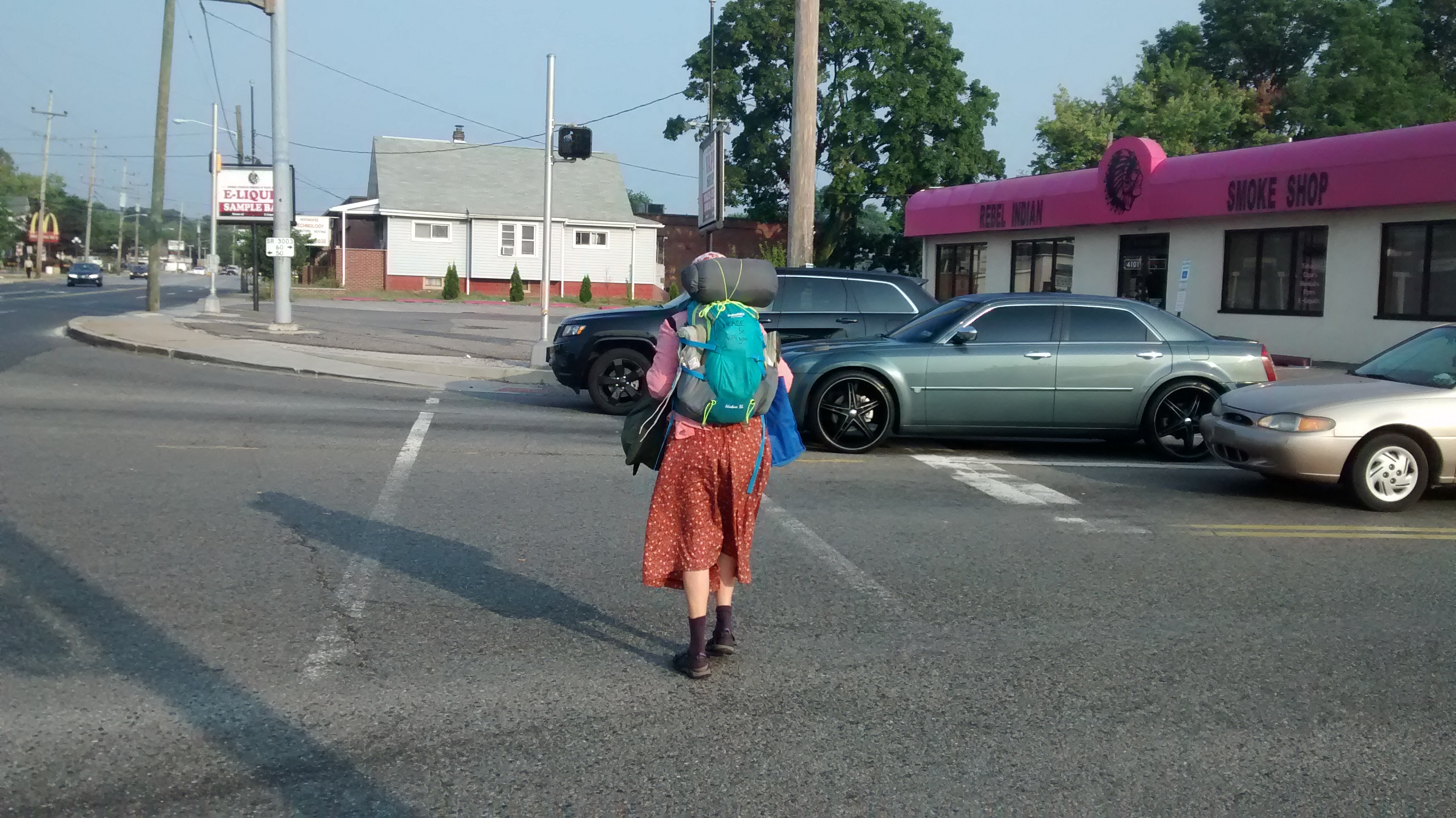
Sheila 1After leaving Philadelphia, Sheila stayed two nights at Pendle Hill retreat center.   There we heard her talk informally about her journey. She touched on various aspects, from logistics, to footwear, to her spiritual leading. We learned, for instance, that in this warm weather Sheila is walking in rubber sandals, with socks. In her pack she also carries a good pair of walking shoes, but she has mailed her hiking boots ahead to Georgia. Like other long-distance hikers, she’s eager to lighten her load. In the past she has participated in walks organized by Native Americans, Buddhists, and others. The longest she has ever walked is three weeks. Now she plans to spend three and a half months walking to Georgia.

On her blog, Sheila writes that she walks for many reasons: “I hope to visit with people whose lives are impacted by the choices our government makes, to think together about ways we can effect change.  I am grateful for support of all sorts but my hope is to be self-sufficient whenever possible and necessary.  Above all, I want to be of service, not a burden to those I visit and engage with people in a way that is meaningful to us aSheila pack 2ll. When away from home I feel blessed to meet people in their own home environment and find that many are eager to offer whatever help they can. I wear a vest or a hat that carries the message ‘Peace be With You.’  It is offered as a blessing and an invitation, if anyone chooses, to talk about what peace is to each of us and the challenges faced in life. Another reason to walk is health. It allows me to stay strong and flexible.  Being outdoors and moving, even in all sorts of weather, is a constant joy.” Sheila hopes to visit as many places of worship as possible, and would love to arrange gatherings of interested people to “share a meal and talk about the social justice and peace issues in the local community.”

The first School of the Americas protest was in 1983, when Catholic priest Roy Bourgeois and two companions entered Ft. Benning military base. They climbed a tree and broadcast the final homily given by Oscar Romero, Archbishop of San Salvador, who was known for speaking against injustice, poverty, torture, and assassination. Romero had been murdered by SOA graduates while saying Mass. His sermon was broadcast in Spanish after lights out, to a group of Latin American military personnel housed in the barracks in Fort Benning:

Brothers, each one of you is one of us. We are the same people. The peasants you kill are your own brothers and sisters. When you hear the voice of a man commanding you to kill, remember instead the voice of God: THOU SHALL NOT KILL!

Father Bourgeois was sentenced to 18 months in prison. (For a vivid account of that first nonviolent protest action, click HERE.)

In 1989, SOA graduates in El Salvador murdered six Jesuit priests, their housekeeper, and her teenage daughter. That’s when Father Bourgeois began the annual protest. During the decades since, people have come from all over the country to protest and participate in the vigil outside the gates of Fort Benning. 22,000 people participated in 2006. In 2000, in response to increasing public outrage at the violence engendered by SOA throughout South America, Congress voted to stop funding the School of the Americas. However, with very minor changes, the school was quickly reopened under a different name, abbreviated WHINSEC. There the U.S. Department of Defense still trains military officers and police from South America. Numerous graduates are associated with oppressive military regimes and have been linked to massacres, murders, torture, intimidation, and assassination. (Click here for more the SOA Watch website which contains more information.)

Participants in the annual SOA vigil carry small white crosses, each with the name of a different person murdered by a graduate of SOA/WHINSEC. During a ceremony that Sheila found very moving, each of the thousands of names is spoken out loud and the group responds with the Spanish word, “Presente,” which means “here” or “present.” Each year, some of the protestors walk onto the grounds of the military base carrying crosses, thereby committing civil disobedience. To date 245 different people have gone to prison as a consequence of their nonviolent protest. (For photos, click here: Sisters of Providence at SOA Watch vigil.)

Sheila arrived at our house on a hot afternoon. She was a very pleasant and easy guest. We served spaghetti for dinner, and she told us it had been her favorite meal since childhood. In the evening she spent time writing and sending out her next blog post. With decades of experience living simply, she is still learning how to use electronic communications. Earlier in her life, while raising her son, she and her former husband lived “off the grid” in rural Maine, growing their own food and heating mostly through their wood stove. More recently, she was a teacher at the Meeting School in New Hampshire, a residential Quaker school that ran an organic farm.

Sheila Terry trees in back yardWhile Sheila stayed with us, we took advantage of her extensive knowledge of plants and gardening. She helped us prune and weed in our back yard, giving us lots of information about how we could care for our flowering trees and bushes, how we could grow lettuce and other greens this fall, and how to improve our soil with compost and ground cover plants. She gave very generously of her time, labor, and knowledge.

Early on the second morning, I walked with Sheila for the first mile of her route, along a busy road. The mile seemed shorter than I expected. Before leaving home, I had checked a map online to see if we could take a back way, but the route had seemed too complicated, so we walked the main road. After watching Sheila continue on without me, however, I suddenly felt inspired to try the back route. It turned out to be a bit of an adventure: some of the curving little “roads” I had seen on the map were in fact the parking lots around apartment complexes. By the time I arrived home, however, I was quite pleased to have discovered a new walking route in my own neighborhood, another unexpected gift from Sheila’s visit.

Sheila walking 1Sheila Garrett has mapped out a route for her walk, which began in Connecticut. After leaving our home in Chester, PA, she walked 10 miles west to Willistown, PA. She wrote me later that she enjoyed her walk, even though she needed to exercise special care where the road had no shoulders. She was able to rest in the shade of a Quaker meetinghouse along her way, and some people passing her on the road stopped to offer bottles of water. On Sunday she attended Goshen Meeting with her weekend hostess, then walked west to Kendal, a Quaker retirement community. She had been looking forward to meeting one of the residents, who had participated long ago in Koinonia Farm, a long-time n inter-racial Christian community in Georgia, which she hopes also to visit. Now Sheila is heading toward Maryland and will pass through or near Aberdeen, Baltimore, Columbia, Rockville and Bethesda. Then she plans to walk through Virginia (Arlington, Culpepper, Ruckersville, Charlottesville, Lynchburg, Chatham.) After crossing into North Carolina she will head for Greensboro and Charlotte. In South Carolina her route turns west toward Atlanta, Georgia, and then south to Columbus, GA, home of Fort Benning.

Sheila doesn’t yet know where she will stay most nights. She trusts, hoping that people who live along her route will contact her and offer her a meal and a bed for the night. In return, she is willing to do gardening and yard work (as she did at our house), or another chore. If you know someone who might be open to hosting her, please forward this blog post.

Sheila was a stranger when I read that she was walking toward Philadelphia. She left our house as a friend. To read her blog, on which she posts accounts of her adventures, or to offer her a place to stay for the night, go to the Putney Friends Meeting website.

Love and blessings, Marcelle

A Contemporary Peace Pilgrimage: When have you offered hospitality to a stranger? What challenges and what gifts came with that? Did it change you in any way? Have you ever felt God leading you to participate in a vigil, a protest, or other kind of witness?

© 2015 Marcelle Martin

Below is a YouTube video with clips from the 2010 SOA Watch vigil.  It includes a prayer by Roy Bourgeois, a bit of the roll call of names, funeral images, and photos of people carrying crosses and inserting them into the chain link fence around Fort Benning.  It features two songs, including “One by One,” by Emma’s Revolution, written for the occasion.   https://www.youtube.com/watch?v=jJv0LZbOkw0

Posted in Quaker Faith Today, Radical Christianity | Tagged , , , , , , , , , | 3 Comments

Streams of Living Water

In April 2015, Pendle Hill conference center offered an extraordinary opportunity for a merging of  the Christian contemplative tradition and the faith and practice of Quakers. Fifty people desiring to immerse themselves more fully into the waters of the Spirit participated in a conference entitled Streams of Living Water, facilitated by Cynthia Bourgeault and Paulette Meier. We explored how meeting for worship and Centering Prayer, when practiced daily, can help us open up more fully to the power of the Spirit that wants to flow through us.  The heart-opening words of the first Quakers testified to their experience of being gathered, healed, guided, and empowered by the Light of Christ within, and we also heard guidance and inspiration from a contemporary contemplative.

Cynthia Bourgeault is an Episcopal priest, noted author, part-time hermit, and esteemed workshop leader. For years she worked as a colleague of Thomas Keating and others in teaching Centering Prayer, a silent practice in which one lets go of grasping onto thoughts (or anything else) and surrenders to the presence and activity of God. Her book Centering Prayer and Inner Awakening is possibly the best on its subject. During the Pendle Hill weekend, she explained this simple form of prayer as a way to practice the self-emptying (or kenosis) which both Jesus and early Friends revealed to be the doorway to a conscious communion and union with God. The unprogrammed Quaker meeting for worship is, similarly, such a pathway. One distinction between the two practices is that Centering Prayer remains silent throughout, while the meeting for worship often includes inspired spoken words, called vocal ministry.

In her book The Wisdom Jesus, Cynthia’s fresh and careful examination of the gospels and other early Christian texts reveals that Jesus invited his disciples into a profound change of consciousness. For many readers today, this is news. It is not, however, new. Early Quakers in the seventeenth-century discovered that the Spirit of Christ was inwardly present as a living teacher inviting them into radical transformation of heart and mind, as well as way of life. Written records of their spiritual experience and the historical record of their transforming influence on society reveal the power that is possible to those who learn to live in the unified consciousness to which the Light of Christ invites us.

Cynthia Bourgeault attended a Quaker school as a child, and then a Friends meeting early in her adult life. However, her hunger for spiritual depth was not met in that meeting, and eventually she moved to the Episcopal Church. Long sojourns at Benedictine monasteries later helped her enter more deeply into contemplative experience and the transformation of consciousness toward which she felt called. She is now a lively, Spirit-filled teacher with a keen interest in helping Quakers better connect with the contemplative depths of our tradition, and a desire to help others learn from the treasures of Quakerism.

Centering Prayer offers practice in letting go of one’s thoughts. Repeatedly consenting or surrendering to the presence and activity of God within eventually leads into a deeper, wordless, unified state of consciousness, an awareness of the presence of God in all things. Cynthia spoke about meeting for worship as another form of contemplative practice. She urged participants in the conference not to speak too easily or soon when feeling a prompting to stand and offer vocal ministry. Let the divine energy of that prompting take you deeper, she suggested, so that you can become vessels of greater currents of the energy of the Holy Spirit. Then the vocal ministry and prophetic witness that eventually comes can become a more powerful expression of the Spirit.

Through most of the history of Christianity, the contemplative tradition was practiced primarily by monks and cloistered nuns whose lives focused on communion with God and prayer for the world. The first Quakers, in the mid seventeenth-century, demonstrated that a community of people can enter the profound, powerful depths of union with God while still living in the world. They were mystics and also prophets, called by the Spirit to demonstrate an alternative way to live one’s daily life. They challenged dishonesty and injustice, and hundreds of them were sent by God to publically speak truth in a repressive society.

Paulette Meier is a Quaker singer/songwriter, teacher, and long-time activist. During a year as Artist-in-Residence at Pendle Hill, she copied powerful passages from the tracts and books of the first Quakers, not only the words of George Fox, but also Margaret Fell, Isaac Penington, Sarah Blackborrow, William Penn, and others. To help herself remember the spiritual guidance offered in these short selections, she put their words to music. These were later recorded in her cd, Timeless Quaker Wisdom in Plainsong. Over the years Paulette has done a lot of singing at outdoor rallies and demonstrations for peace and social justice, and there is great vigor in the way she delivers her plainsong chants. The words of early Friends, sung in Paulette’s strong, clear voice, convey the truth they found in a way that enters the heart as well as the mind.  During the weekend we sang these words together, allowing the chants to be a pathway toward the profound shift in consciousness to which Jesus invited his followers. Many people who attended the conference at Pendle Hill had already found that listening to the cd over and over provides heart-touching spiritual guidance.

For example, the first passage in the album is instruction from early Quaker leader George Fox:  Be still and cool in thy own mind and spirit from thy own thoughts…

Many forms of contemplative prayer and meditation give similar instructions to let go of one’s own thinking and let the mind and spirit become still. If one’s mind becomes quiet, Fox says, then thou wilt feel the principle of God to turn thy mind to the Lord God.

Let go of your own thinking, let your mind become still, quiet, and calm. That will allow you to feel the divine principle, seed, or Christ light within, and this will focus your mind on God.  After that, thou wilt receive God’s strength and power…

The relationship between practicing this stillness of mind and receiving the power of God is one of the themes running through the words of early Friends.  In between this stillness and receiving divine power there is a clarity that arises, a necessary seeing of the way things really are, within and without.  In another of his epistles, Fox  urges Friends to, Stand still in that which is pure. If one gives patient, quiet attention to the pure Light of God within, it will reveal things in one’s consciousness and behavior that may be difficult to acknowledge. However, power is also given to overcome them and to change. Stand still in that which shows and discovers, and there doth strength immediately come in.

At the Pendle Hill conference in April, we experienced two half-hour meetings for worship and one twenty-minute period of Centering Prayer. During the second morning’s meeting for worship there was a much more profound and fertile silence. Many felt encouraged to engage regularly in contemplative practices such as Centering Prayer or the kind of daily period of worship maintained at Pendle Hill. Regular practice can, indeed, help Friends today move toward a powerful collective spiritual transformation of the sort experienced by the first Quakers. More teaching about what happens during worship and prayer, and about the nature of consciousness would also be beneficial.

The Quaker path springs from a deep communion with God  This flows into the world as loving service, ministry, and prophetic truth telling.   Opening to the consciousness to which the divine Light calls us requires that we learn the spiritual surrender that is practiced in meetings for worship and contemplative prayer.  I look forward to the mutual enrichment that can come from continued dialogue between Christian contemplatives, contemporary prophetic people, and the rich teaching and practices of Quakerism.

Taughannock Falls 2 crop

Streams of Living Water: What is your experience of letting go of thoughts and allowing your mind to become still and quiet? What practices help you to surrender in trust to God, the Light, Christ, divine Love? Have you experienced the divine strength and power that is given when one’s quiet mind is focused attentively on God, the Light, or Christ within? 

© 2015 Marcelle Martin

Our Life is Love: the Quaker Spiritual Journey, by Marcelle Martin, is available from Inner Light Books in hardback, paperback, and ebook. (An excerpt and a study guide are also available on that website.) The book was designed to be a resource for both individuals and groups to explore their spiritual experiences. It describes the journey of faithfulness that leads people to actively engage in God’s work of making this world a better place for all. To order multiple books for a study group, postage free, contact us.

Find a Quaker Meeting near you: Quaker Finder

Marcelle Martin is a core teacher in an upcoming 9-month program, to be held online and at Woolman Hill Retreat Center in Massachusetts. Nurturing Faithfulness is a faith and leadership program designed to help Friends meet God more deeply, hone methods of discernment, reach for fuller faithfulness, and ultimately bring these gifts and strengthened abilities back to home meetings, and beyond. Program participants become a community of practice to support each other in offering spiritual nurture and encouraging leadings, service, and faithful witness. August 2019 – May 2020

Here is a video in which past participants talk about the program:

http://woolmanhill.org/upcomingprograms/nurturingfaithfulness/#Informational-Video

For information about this and other upcoming courses and workshops with Marcelle, go to Teaching and Upcoming Workshops.

Find a Quaker Meeting near you: Quaker Finder

Posted in Contemplative spirituality, Learning from Early Friends, Quaker Faith Today, Radical Christianity | Tagged , , , , , , , , , , , , , | 7 Comments

Gathering in the Divine Mystery

In the Quaker practice of group worship on the basis of silence come special times when an electric hush and solemnity and depth of power steals over the worshippers. A blanket of divine covering comes over the room, and a quickening Presence pervades us….      Thomas Kelly, The Gathered Meeting

When I first attended Quaker meeting, it was uncommon to hear Friends speak about mystical experiences. Occasionally I encountered debates about whether Quakerism was a mystical or prophetic religion. Some thought it was both, others stated emphatically that it was prophetic but not mystical, and others were cautious of the kind of closeness to God that might lead to either kind of experience. The debate puzzled me: I believed that only those who experience a mystical connection to God can hear and respond to a true prophetic call. From the books I read, especially about George Fox, it seemed evident that the early Quaker movement was both mystical and prophetic. At the same time, early Friends lived out their faith in the concrete details of ordinary human life, in the midst of the world.

What about contemporary Friends? It was moving to find passages from the writing of Thomas Kelly in Philadelphia Yearly Meeting’s book of Faith and Practice. Kelly’s writing gave clear evidence that some Friends in our time also experienced a direct, mystical connection with God.  Other passages in Faith and Practice revealed that out of an inward, mystical relationship to God, many people in our time had been led to acts of prophetic speaking or living.

I was hungry for such accounts, as they helped me better understand how God was at work in my life. During vocal ministry, I sometimes spoke of unusual inward experiences, such as seeing a spiritual Light flowing through all things, hearing a voice giving gentle guidance, feeling a fiery energy inside, having vivid dreams and visions about the power of God to heal the world. My heart pounded when I felt a prompting to speak about such an experience during meeting for worship, and there was a mystical sense that the prompting came from beyond me, from something larger and divine.  Many Friends in the meeting provided a supportive context in which to offer such vocal ministry. I heard, however, that one or more people felt uncomfortable hearing about such experiences.

Wondering if Quakerism was, indeed, the right faith community to nurture my sense of a direct connection with the guidance and leadings of God, I attended the summer FGC Gathering and took a five-day workshop on Quaker Mysticism.  I met Quakers from across the country who’d had similar experiences and who, like me, felt a powerful call to live a life of faithfulness, close to God. Many had felt the need to be “in the closet” in their monthly and yearly meetings about the nature of their spiritual experiences.  I then joined some ongoing groups of Friends who gathered once or twice a month to share about our spiritual lives. One group identified itself as mystics, another as contemplatives. The need to share experiences initially brought both groups together. This changed over time, and what later drew us most powerfully was the divine presence we experienced when we settled in silence together. In both groups we began to worship for longer and longer periods of time.

More than twenty years later, sharing mystical or contemplative experiences is more comfortably received in most meetings. However, many Friends with a clear sense of divine guidance are uncomfortable calling themselves mystics or contemplatives. Some feel it more appropriate to speak of their call to ministry, spiritual nurture, or eldering. Others simply help deepen the meetings for worship in which they participate and pray for others without giving a name to their experience. However we speak of ourselves, many of us still feel called to gather from time to time with others who are drawn to mystical communion with God.

My Pendle Hill pamphlet Invitation to a Deeper Communion describes the long meetings in which, sometimes after hours of silence together, early Friends felt themselves gathered into the Kingdom of Heaven, present in their midst. It also recounts experiences of Friends today who have taken up a regular practice of unprogrammed meetings for worship lasting for hours. Saturday gatherings for this kind of extended worship are currently being held quarterly in Philadelphia Yearly Meeting. The next one will be on June 6, 2015, at Lancaster Meeting. Friends United Meeting is planning an extended meeting for worship for one evening of their upcoming gathering entitled Stoking the Fire. Quakers have also organized weekend retreats that are, in essence, a meeting for worship that lasts for days. The School of the Spirit Ministry offers regular silent retreats.

In addition, editors of the newsletter What Canst Thou Say? have organized a few weekend retreats for Quaker mystics and contemplatives. Last year’s gathering was followed by two days of mostly unprogrammed worship, an opportunity that helped to take me and many in that group to a deeper connection with God. Some experienced a universal sense of divine presence, and others felt the presence and guidance most specifically of Christ. During the two days of extended worship, many received a taste of contemplative depth, and there was also a prophetic quickening among us.

I look forward to attending the upcoming 2015 gathering June 12-14, in Richmond, Indiana. The weekend retreat, entitled “Touching God Together,” will be led by Elaine Emily. For those who are interested, two days of unprogrammed meetings for worship will follow.  The Registration Form is available here ( Word file ) or ( pdf file. ) Although the form says May 1st, the registration deadline is May 15th.

rainbow 6 May 2015

Gathering in the Divine Mystery: During worship, prayer, or social witness do you ever feel drawn into a profound spiritual unity with God and others? Has regular spiritual practice led to a sense of deeper grounding in God, Christ, or the Light in the activities of your daily life? Have you had spiritual experiences that involve God’s love, heavenly peace, inward voices, visions, senses, knowings, leadings, or fiery spiritual energy? Would you like to enter a deeper communion in which you might hear and discern more clearly the leadings of the Spirit? Have you found ways to gather with Friends who share similar experiences and spiritual longings?

© 2015 Marcelle Martin

Posted in Learning from Early Friends, Quaker Faith Today, Radical Christianity | Tagged , , , , , , , , , , | 5 Comments

A Story of Renewal

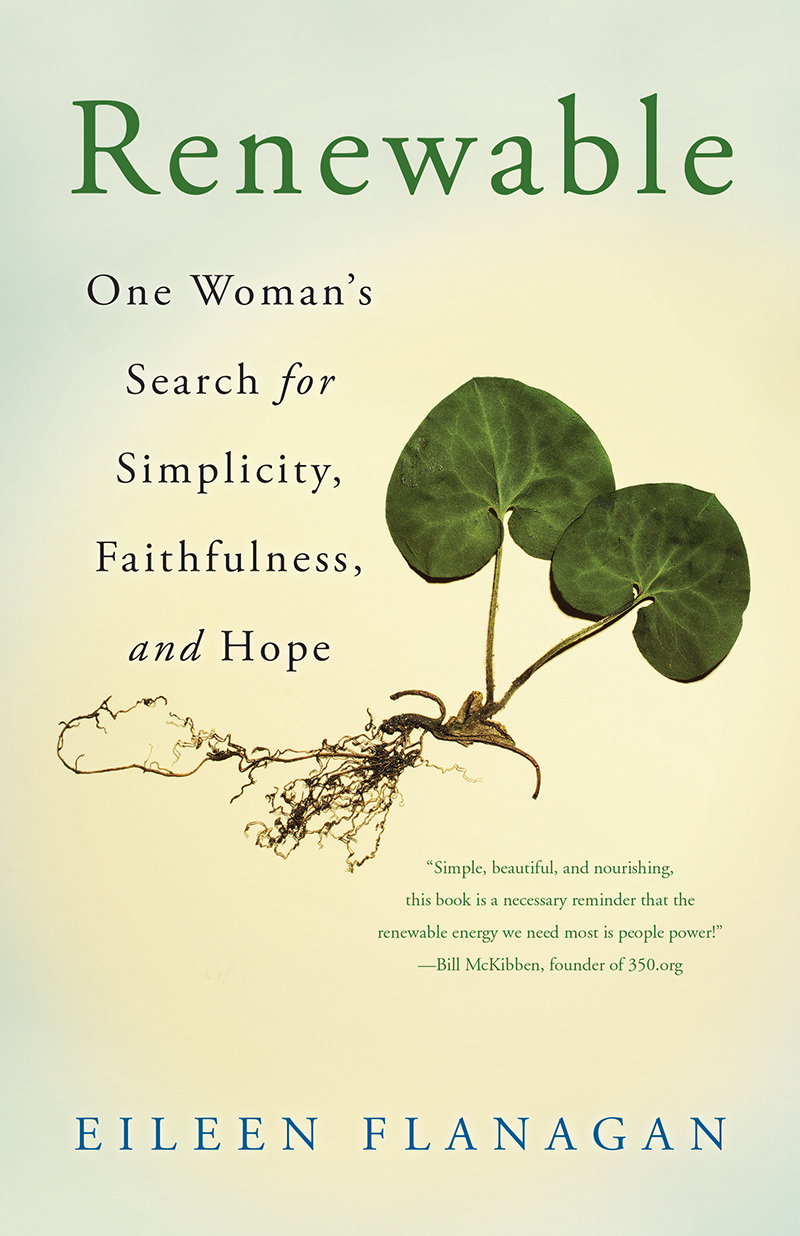
On Earth Day I would like to tell you about a wonderfully informative, inspiring, and funny book, Renewable, by Eileen Flanagan, a Quaker friend of mine whose life was renewed at the age of 49.

Flanagan captured my attention in the opening paragraph, when she describes handcuffing herself to the White House fence beside some very famous people to send a message to President Obama that the Keystone XL Pipeline would be a disaster for the planet.  The rest of the book explains what led her to that courageous act, for which she was arrested and briefly jailed. She tells the story of her idealistic youth, when she spent 3 years in the Peace Corps in Africa, delighting in a simple, beautiful culture that celebrated interdependence. With frankness and wry humor, she then describes the next decades of her life back in the USA. Though she enjoyed marriage and motherhood, she woke up in midlife to find she had become someone different from the person she had thought she would be, distant from her own soul.

She and her family had just moved into a lovely, larger home to accommodate the teenagers’ needs for more space in which to make noise, her husband’s need for a room that was quiet, and her own desire for an office in which to write. Instead of finding joy in this new home, Flanagan encounters loneliness and a strange sadness. Dismayed by the materialism of her life and disquieted by a sense that she is somehow failing to follow her true calling, she searches to find her path again.

In this book Flanagan skillfully interweaves her own frank and humorous story with larger issues that she knows will affect the lives of her children. She travels back to Africa and sees how climate change is impacting the lives of people there, including the community in which she had lived earlier. Rains have become unpredictable, temperatures have risen, crops have failed. Doing some research, she hears sobering predictions about how terrible the impact may be in the not-too-distant future, when water becomes even more scarce. It becomes clear to Flanagan that recycling and modifying her personal and family life is not enough to reverse the planetary changes that are in motion. After she recognizes how much the policies and practices of large corporations–including “extreme extraction” methods–are pushing the planet to future disaster, she becomes an engaged participant in an activist group called the Earth Quaker Action Team. She joins EQAT in finding creative and joyful ways to pressure PNC Bank (a Quaker-founded bank) to stop investing its money in blowing up mountaintops in Appalachia to extract coal. Flanagan learns to exercise her “courage muscle,” and her anguish turns to joy and empowerment when she finds the role that is true to her soul and uses her gifts.

After five years of creative pressure and protest from Earth Quaker Action Team, PNC Bank recently announced a change in policy.  It will no longer invest in mountaintop removal coal mining.

This story encourages readers to ask ourselves if we are following God’s call, finding the place where the needs of the world intersect with the joy that bubbles up when we are being true to our deeper selves and to life itself.

Flanagan’s prose is simple and clear. The eye with which she looks at the world is wise, and she has a gift for showing the connections between things. I was eager to read a few chapters of this book each night because the way she tells her story is full of so much humor, love, and hope for the future.

Flanagan’s website has links to four different ways to purchase her book: http://eileenflanagan.com/Renewable/

In celebration of Earth Day, the electronic version of the book is available for the sale price of $3.99.   Wed. April 22nd through Sunday, April 26th.  http://www.amazon.com/gp/product/B00SUUFSNG/ref=as_li_tl?ie=UTF8&camp=1789&creative=390957&creativeASIN=B00SUUFSNG&linkCode=as2&tag=thewritingofeile&linkId=PQT3E34IAHCRFR4N

To support this Quaker author’s effort to share her message that our lives and our planet are renewable, write a review of the book for Amazon.com. After fifty reviews are posted, her book will be promoted more fully.

A Story of Renewal: Do you feel concerned about climate change and its effects on the world’s poorest people? Do you have questions about how fully your life is aligned with your spiritual purpose? Do you, too, long to put your gifts to use in ways that serve God and benefit future generations?


© 2015 Marcelle Martin


Posted in Quaker Faith Today | Tagged , , , , , , , , , , | 5 Comments

Listen to Your Children Praying

Days after moving back to the Philadelphia area, I attended the 20th anniversary concert of Tribe 1, “an ensemble of singers, poets and drummers dedicated to performing songs of Transformation.” In his introduction, Brother Robb Carter praised the group for the way it combines prayer, protest, and perseverance. Their opening song was a cry from the heart about the chilling, unjust violence routinely inflicted on black men in this country. Some new pieces called us to act together to weave a healthy society. In powerful gospel songs, the group moved us with heartfelt prayer. Together we created and sang a new song, with lines supplied by members of the audience put to music by the members of the ensemble.  Then Tribe 1 got their interracial and multicultural audience to our feet dancing in the aisles, inspiring us to remember that we can see through the illusions that imprison us and our society, and encouraging us to act from a place of powerful love and wholeness.

It was heart-warming to hear a favorite song I had sung years ago while living at Pendle Hill retreat and study center, where I participated in the gospel choir led by Niyonu Spann, founder of Tribe 1. During those years, while Niyonu was Dean of Pendle Hill, I had been fortunate to live in a racially and culturally diverse community of U.S. citizens and international students. As I danced in the old stone church where the concert was held, I recognized more than I had ever done before, what a precious gift it is to be part of an intimate and diverse community. I realized more clearly how impoverishing it is to spend too much time in settings in which there is little diversity of race or class, in which there is little variation from the culturally dominant modes of thinking, feeling, communicating, moving, and being in community.

The concert was dynamic. I felt more clearly the power that flows from prayer, especially prayer with others. I felt in both mind and body, and within the gathered group, the reality of how what we focus on contributes to our collective experience. I felt the power of naming reality.  We left encouraged to put into action the movement toward wholeness which we had experienced together.

At home, I listened to my copy of Tribe 1’s new cd, There is a Light, delighted to hear the concert again.   For days afterwards, while cooking, unpacking boxes, or taking care of the seemingly unending tasks associated with moving into a new home, I kept hearing the opening lines to my favorite hymn:

            Lord, listen to your children praying.

            Lord, send your Spirit to this place.

            Send us your love, send us your power, send us your grace.

When I heard those words repeatedly sung in my heart, I felt called to stop working for a while, sit down, pray, and listen for the quiet inward voice of the Spirit. I sensed how attention to God’s Spirit helps bring forth the matrix from which wholeness and love are manifested in the world.

My experience at the Tribe 1 concert helped me recognize that I needed to attend the special January 10th “called meeting” of Philadelphia Yearly Meeting to address racism. I was among more than 400 Quakers who attended from 79 different Quaker meetings in the region, joined by many visitors. We began with silent worship and prayer. Lord, listen to your children praying.

At last summer’s annual sessions, concerns had been raised about many of the “isms” that separate and oppress various groups of people. Setting the framework for our time together, our clerk, Jada Jackson, recognized that sexism, classism, racism, and other isms of oppression are all linked. However, the elders and clerks who had been charged to discern how God wanted us to focus had been in unity that as a Yearly Meeting we are specifically called to address racism, amongst ourselves and in our society. Lord, send your Spirit to this place.

We were each asked to reflect on our privileges, and then on the ways we might be called to use our privileges to combat racism. And how might we do this together, in our Quaker meetings? Send us your love, send us your power, send us your grace.

For part of our time, we met in smaller groups. I was in one of four groups that formed from the seven meetings in Philadelphia Quarter. During worshipful sharing and listening, I was moved by what I heard, both from African American and white participants who told what they had learned from searching themselves and from their experience in the world. Listening, I was moved to a deeper commitment to learn about the ways that racism is still imbedded in my own consciousness and in the structures of our society. I wondered what I could do, personally and as a member of the Quaker community, to help combat racism.

All of the members of Philadelphia Yearly Meeting, which comprises just over one hundred Quaker meetings, are encouraged this year to read and discuss The New Jim Crow, by lawyer Michelle Alexander. This can help us to educate ourselves about the destructive ways that our society is systematically perpetuating raced-based oppression, particularly through a prison system and “War on Drugs” that unjustly targets people of color, especially black men. After prison they are deprived for the rest of their lives of many of the rights of citizenship and are henceforth legally discriminated against in almost every sphere of public life. Poverty and broken families are perpetuated by this system. Alexander’s book calls for a heightened political consciousness and a widespread social movement for change. I do not know a lot about these matters, but I am willing to learn more.  And I’m willing to listen more attentively to how God may be calling for action.  The Civil Rights movement grew out of radical faith put into action, empowered by the Spirit. As a community of faith, Quakers know that movement toward love and wholeness arises from spiritual clarity and surrender to God’s leadings.

Out of listening in my small group, I came away with the conviction that I need to educate myself more about the realities of how racism is still embedded structurally in our society, and learn how I can become a better advocate for racial justice. How can I live in a way that helps to create a loving, fair society? Prayer needs to be a part of every step of the way. Can I let God, through the Light of Christ within, transform me to be more purely and truly a vessel of God’s love? How am I being called to action in my own community, both my Quaker faith community and the city of Chester?

At the end of the called meeting, hundreds of Quakers reassembled in the West Room of Philadelphia’s Arch Street Meetinghouse. Many of us, like me, had been moved to a place of deeper understanding and commitment to the work of combating racism. The body approved a statement of our call and commitment to action.

            Lord, listen to your children praying.

            Lord, send your Spirit to this place.

            Send us your love, send us your power, send us your grace.

Listen to Your Children Praying: What is tugging on your heart in relation to the struggles, violence, and oppression in our world? How have you witnessed oppression in your own life and in your society? Are you interested in learning more about the hidden ways in which racism is perpetuated? How do you use your privileges to combat racism? Is your religious community concerned about this? Is your religious community welcoming of diversity? How does God want us to live and act so as to bring more equality, justice, healing, and love in the world?

© 2015 Marcelle Martin

Posted in Quaker Faith Today, Radical Christianity | Tagged , , , , , , , , | 7 Comments